“Low ferritin,” “iron deficiency,” and “anemia” get used almost interchangeably, but they’re three different points on the same timeline. Knowing which one you’re at matters, because it decides how early you can catch and fix an iron problem — and iron deficiency causes real symptoms long before it ever earns the label “anemia.”
The timeline of iron loss
Iron depletion happens in stages, and the markers fall in order:
- Iron stores drop first → low ferritin. Your reservoir empties before anything else changes. This is the earliest detectable stage. (What low ferritin means.)
- Circulating iron falls → iron deficiency. Serum iron and transferrin saturation drop; the full iron panel shows it. Symptoms are often already present.
- Red blood cells suffer → iron-deficiency anemia. Only now does hemoglobin fall into the anemic range and show up on a standard complete blood count.
So by the time a routine “anemia check” (hemoglobin) is abnormal, the problem has usually been building for a long time.
The stat most people don’t know
Iron deficiency is the most common nutritional deficiency worldwide (WHO) — and a large share of it is iron deficiency without anemia: low ferritin, normal hemoglobin, real symptoms. A ferritin below ~30 ng/mL is highly specific for iron deficiency, well before hemoglobin drops (AAFP). This is exactly the group that gets told “your blood count is normal” while still feeling exhausted.
Why the distinction matters
- If you wait for anemia, you miss years when the problem was easier to fix and symptoms were already affecting you.
- Symptoms track iron deficiency, not just anemia — fatigue, brain fog, hair thinning, cold hands, and reduced exercise tolerance can all appear at the low-ferritin stage.
- The fix is the same direction but caught earlier is easier — and re-testing shows whether stores are actually rebuilding.
How they line up
| Stage | Ferritin | Hemoglobin | Label |
|---|---|---|---|
| Early | Low | Normal | Iron deficiency without anemia |
| Later | Low | Low | Iron-deficiency anemia |
What this looks like in Bevita
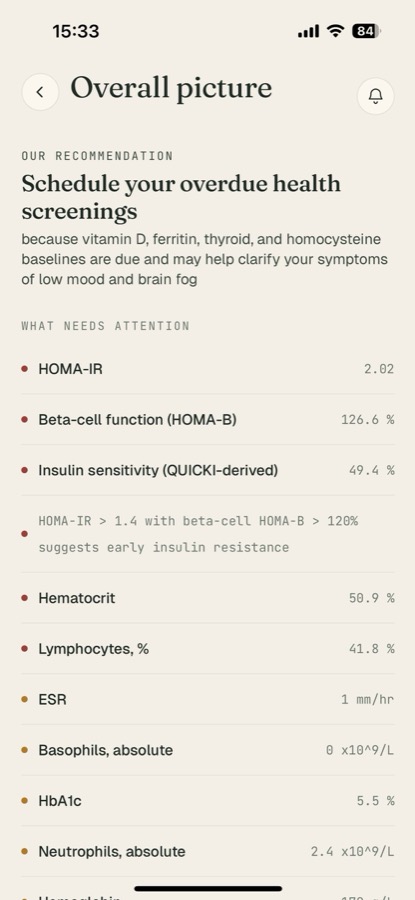
Because these stages are defined by which markers have changed, seeing them together is what tells you where you are. Bevita tracks ferritin alongside your hemoglobin and the rest of the iron panel, so a low ferritin with still-normal hemoglobin gets flagged as early iron deficiency — the stage worth acting on — instead of being dismissed because “the blood count is fine.”
What to do
- Ask for ferritin, not just hemoglobin — it catches the problem stages earlier.
- Don’t wait for anemia — low ferritin with symptoms is worth addressing.
- Confirm with the full iron panel and re-test after any change.
- Talk to a clinician — iron deficiency has causes worth investigating, and supplementation should be guided.
References
- World Health Organization. Anaemia.
- Short MW, Domagalski JE. Iron Deficiency Anemia: Evaluation and Management. AAFP.
- NIH Office of Dietary Supplements. Iron — Health Professional Fact Sheet.
This article is for education and isn’t medical advice. Discuss your results with a qualified clinician.
Track your iron status with Bevita
Catching iron trouble early means watching ferritin, not waiting for anemia. Upload your labs to Bevita and it tracks ferritin with your full blood count over time, flags the early stage, and ties it to your symptoms. Download Bevita, upload your bloodwork, and catch iron deficiency before it becomes anemia.