Ferritin is one of the most frequently ordered blood tests, yet it’s also one of the most misunderstood. Your doctor might say “your ferritin is low” — but what does that actually mean for your health?
What is ferritin?
Ferritin is a protein that stores iron in your body. Think of it as your iron reservoir. When your body needs iron, it draws from this reserve. When you have excess iron, it’s stored as ferritin.
A ferritin blood test measures how much iron you have stored — not how much is circulating in your blood right now, but your overall reserves.
What do the numbers mean?
Reference ranges vary by lab, but generally:
- Below 30 ng/mL: Functionally low — your body may not have enough stored iron to meet demands
- 30-100 ng/mL: Optimal range for most people
- 100-300 ng/mL: Normal but higher end — worth monitoring
- Above 300 ng/mL: Elevated — could indicate inflammation, liver issues, or iron overload
The tricky part: the “normal” range on your lab report often starts as low as 12-15 ng/mL. But a ferritin below 30 ng/mL is highly specific for iron deficiency — at that cutoff, sensitivity for diagnosing iron deficiency is about 92% and specificity about 98% (AAFP). The WHO sets the depletion threshold at 15 ng/mL, but many clinicians now use ≤30 ng/mL to avoid missing symptomatic cases (WHO guideline, NCBI). So you can feel the effects of low iron while your lab still says “normal.” (See the full ferritin levels chart for normal vs optimal ranges.)
Symptoms of low ferritin
- Fatigue and low energy (the most common)
- Brain fog and difficulty concentrating
- Hair thinning or loss
- Cold hands and feet
- Restless legs, especially at night
- Shortness of breath during exercise
- Brittle nails
Who’s at risk?
- Women with heavy periods — monthly blood loss depletes iron stores
- Vegetarians and vegans — plant-based iron (non-heme) is less bioavailable
- Endurance athletes — iron loss through sweat and foot-strike hemolysis
- People with digestive issues — celiac disease, Crohn’s, or gut inflammation can impair iron absorption
- Frequent blood donors — each donation removes ~200-250mg of iron
What to do about it
- Get a full iron panel — not just ferritin, but also serum iron, TIBC, and transferrin saturation. This gives the complete picture. (And know the difference between low ferritin, iron deficiency, and anemia.)
- Talk to your doctor — if your ferritin is below 30 and you have symptoms, it’s worth discussing whether supplementation is appropriate.
- Don’t self-supplement blindly — too much iron is also dangerous. Get tested first.
- Track your levels — ferritin changes slowly. Re-test in 3 months after any intervention.
References
- Short MW, Domagalski JE. Iron Deficiency Anemia: Evaluation and Management. American Family Physician (AAFP).
- World Health Organization. WHO guideline on use of ferritin concentrations to assess iron status (NCBI).
- National Institutes of Health, Office of Dietary Supplements. Iron — Health Professional Fact Sheet.
This article is for education and isn’t medical advice. Discuss your results with a qualified clinician.
How Bevita helps
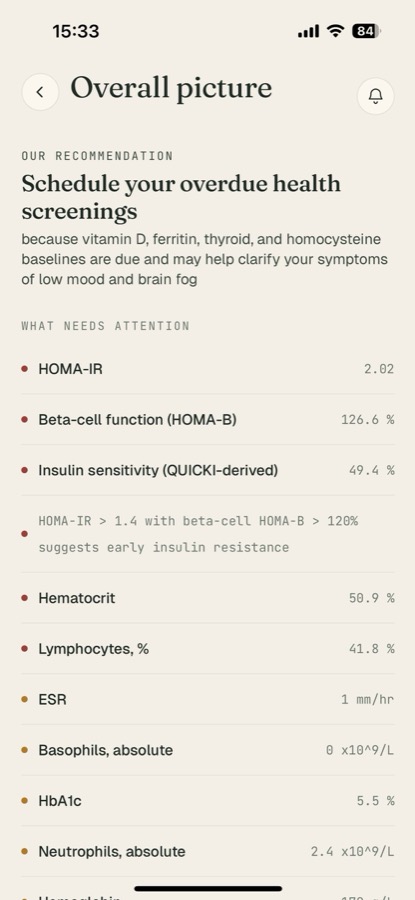
When you upload your lab results to Bevita, it tracks your ferritin over time, shows you the trend, and flags when it’s time to retest. If your ferritin has been dropping over multiple tests, Bevita connects that pattern to your symptom journal — if you’ve been logging fatigue, it might suggest: “Your declining ferritin correlates with your reported fatigue symptoms. Consider discussing iron supplementation with your clinician.”
That’s the difference between a single number on a lab report and a health record that actually understands your story.